MED039000
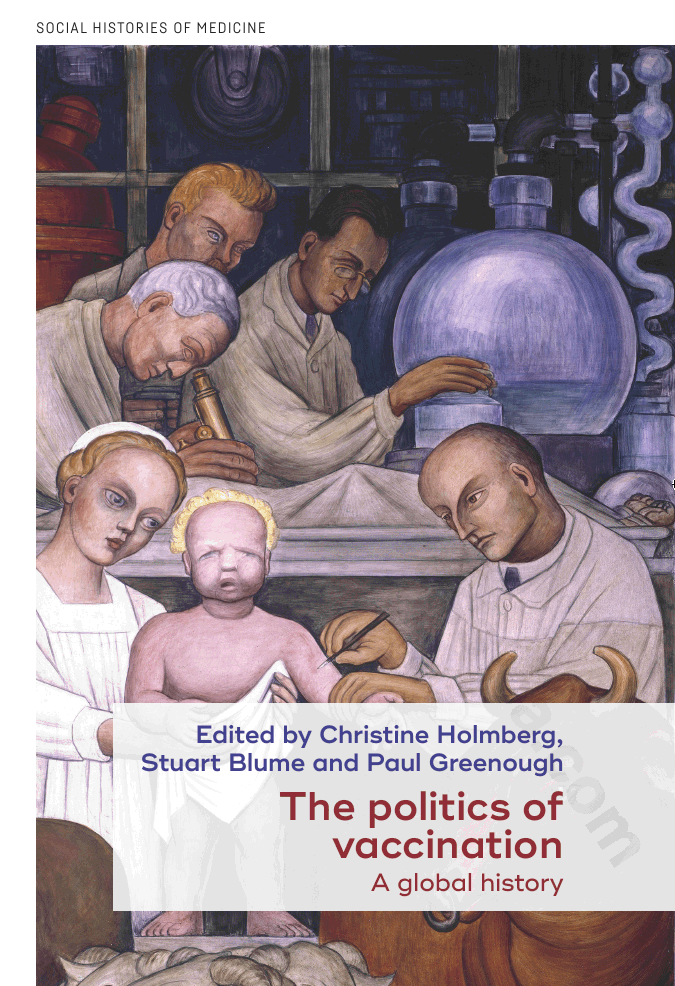
The Politics of Vaccination: A global history
...This book’s eleven chapters and afterword document key campaigns against major infections since 1800 (but mostly after 1950) in Europe, South and East Asia, West Africa and the Americas. Throughout, the authors explore relationships among vaccination, vaccine-making and the discourses and debates on citizenship and nationhood that accompanied mass campaigns. Two bold, not wholly unfamiliar generalisations emerge: • A government’s capacity to manufacture its own vaccines has frequently played a role in building and sustaining national sovereignty. • The success or failure of a vaccination campaign has notable effects on the inner formation of participants’ sense of community and citizenship. As will be seen, mass immunisation should not be considered a neutral practice; it requires assessment in its relation to state power, national identity and the individual’s sense of obligation to self and others...